Georgian cuisine stands as one of the world's most distinctive and flavorful culinary traditions, a testament to the country's rich history and cultural diversity. Nestled at the crossroads of Europe and Asia, Georgia has developed a unique gastronomic identity that combines influences from neighboring countries while maintaining its own authentic character. For travelers visiting this beautiful country, exploring Georgian cuisine is not just about eating—it's a journey into the heart of Georgian culture, hospitality, and tradition.
This comprehensive guide will introduce you to the essential dishes that define Georgian cuisine, helping you navigate menus, understand local food customs, and fully appreciate one of the most underrated culinary destinations in the world.
The Foundation of Georgian Cuisine
Georgian cuisine is built on fresh, high-quality ingredients and time-honored cooking techniques passed down through generations. The country's diverse geography—from the Black Sea coast to the Caucasus Mountains—provides an abundance of fresh vegetables, fruits, herbs, and spices that form the backbone of Georgian cooking.
Key ingredients that appear throughout Georgian cuisine include walnuts, which are used in countless dishes; fresh herbs like cilantro, dill, and parsley; aromatic spices such as coriander, fenugreek, and marigold; and of course, the famous Georgian cheese, which varies by region but is always delicious.
Khachapuri: The Iconic Georgian Cheese Bread
No discussion of Georgian cuisine can begin without mentioning khachapuri, the country's most famous dish. This cheese-filled bread comes in several regional variations, each with its own character and flavor profile.
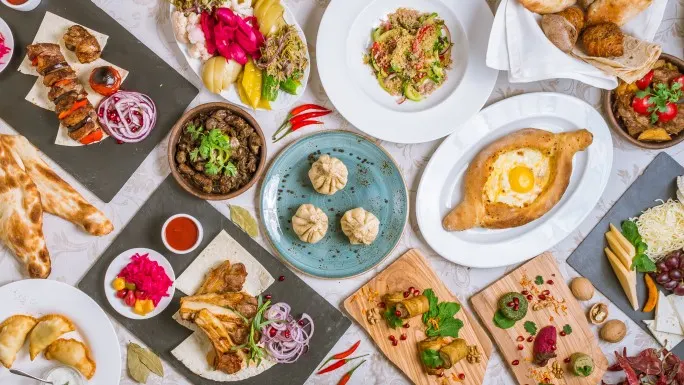
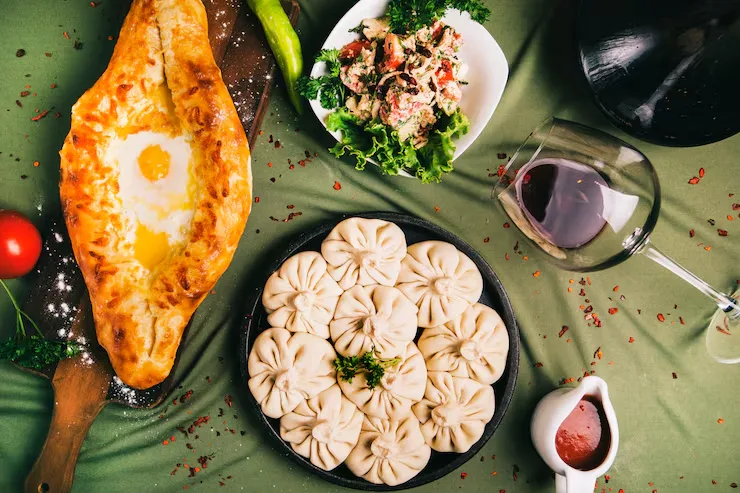
The most famous version is Adjarian khachapuri, shaped like a boat with an egg cracked into the center. The warm, gooey cheese and runny egg yolk create a rich, satisfying dish that's perfect for breakfast or any meal. Other popular variations include Imeretian khachapuri (round and filled with cheese), Megrelian khachapuri (with extra cheese on top), and Ossetian khachapuri (filled with cheese and potatoes).
Khachapuri is more than just food in Georgia—it's a symbol of hospitality and home. Every Georgian family has their own recipe, and sharing khachapuri is a way of welcoming guests and showing care.
Khinkali: Georgia's Beloved Dumplings
Khinkali are large, soup-filled dumplings that are one of Georgia's most beloved comfort foods. These hand-pleated dumplings are typically filled with spiced meat (usually beef or pork), herbs, and a rich broth that creates a burst of flavor when you bite into them.
The proper way to eat khinkali is an art form: hold the dumpling by its topknot, take a small bite from the side, sip the hot broth, then eat the rest. The topknot, which is thicker and less flavorful, is traditionally left on the plate—a sign that you've eaten enough.
Khinkali are often enjoyed with black pepper and beer, making them a favorite for social gatherings and celebrations. They're typically served in large quantities, as Georgians believe that food should be abundant when shared with others.
Traditional Georgian Salads and Appetizers
Georgian cuisine features an incredible variety of salads and appetizers, many of which showcase the country's love of fresh vegetables and bold flavors.
Pkhali is a traditional dish made from finely chopped vegetables (spinach, beets, or beans) mixed with walnuts, garlic, and herbs, then formed into small balls. This dish perfectly represents Georgian cuisine's emphasis on fresh, natural ingredients and complex flavors.
Badrijani nigvzit, or eggplant rolls with walnut paste, is another must-try appetizer. Thin slices of fried eggplant are rolled around a rich walnut and garlic filling, creating a dish that's both elegant and deeply satisfying.
Georgian salads often feature fresh tomatoes, cucumbers, and herbs dressed with walnut sauce or simple oil and vinegar. The emphasis is always on freshness and quality of ingredients rather than complex preparation.
Meat Dishes: From Shashlik to Chakhokhbili
Georgian meat dishes are hearty, flavorful, and often cooked over open flames or in traditional clay ovens. Shashlik, or grilled meat skewers, is a popular choice, with pork, beef, or chicken marinated in spices and grilled to perfection.
Chakhokhbili is a traditional Georgian chicken stew cooked with tomatoes, herbs, and spices. This dish exemplifies Georgian cooking's ability to create complex, layered flavors from simple ingredients.
Mtsvadi, or Georgian barbecue, is a social event as much as a meal. Large pieces of meat are marinated, then grilled over hot coals, often in outdoor settings where friends and family gather to share food and stories.
Vegetarian Delights in Georgian Cuisine
Despite its reputation for meat dishes, Georgian cuisine offers an abundance of vegetarian options, many of which are naturally vegan. The country's Orthodox Christian traditions, which include numerous fasting periods, have contributed to a rich tradition of plant-based cooking.
Lobio, or bean dishes, are a staple of Georgian vegetarian cuisine. Red beans are cooked with herbs, spices, and walnuts, creating a hearty, protein-rich dish that's both nutritious and delicious.
Ajapsandali is a Georgian vegetable stew featuring eggplant, tomatoes, peppers, and herbs. This dish showcases the country's love of fresh vegetables and demonstrates how simple ingredients can create extraordinary flavors.
Georgian Bread and Baking Traditions
Bread holds a special place in Georgian culture, and the country has a rich tradition of bread-making. Shotis puri, the traditional Georgian bread, is baked in special clay ovens called tones. This long, boat-shaped bread has a crispy crust and soft interior, perfect for dipping in sauces or eating with cheese.
Georgian bread is often used as a utensil, with pieces torn off to scoop up sauces, stews, and other dishes. This practice reflects the communal, sharing nature of Georgian dining.
Georgian Desserts and Sweets
Georgian desserts are often simple but delicious, featuring honey, nuts, and fresh fruits. Churchkhela, sometimes called Georgian Snickers, is made by dipping strings of walnuts in thickened grape juice, then drying them. This traditional sweet is both nutritious and satisfying.
Gozinaki, a honey and walnut candy, is another traditional dessert often served during holidays and celebrations. The combination of sweet honey and rich walnuts creates a treat that's both indulgent and wholesome.
Fresh fruits are also an important part of Georgian desserts, with the country's orchards producing an abundance of peaches, plums, grapes, and other fruits throughout the growing season.
The Georgian Supra: A Feast of Hospitality
Perhaps the most important aspect of Georgian cuisine is the supra, or traditional feast. A supra is more than just a meal—it's a celebration of life, friendship, and community. Led by a tamada, or toastmaster, a supra can last for hours, with numerous toasts, songs, and stories shared among guests.
At a supra, food is served in abundance, with multiple courses and dishes covering the table. The emphasis is on sharing, generosity, and creating connections between people. For travelers, experiencing a supra is one of the most authentic ways to understand Georgian culture and hospitality.
Regional Variations in Georgian Cuisine
Georgia's diverse regions each contribute their own specialties to the national cuisine. Western Georgia, with its proximity to the Black Sea, features more fish dishes and lighter preparations. Eastern Georgia, particularly the Kakheti region, is known for its hearty meat dishes and strong connection to winemaking traditions.
Mountain regions have developed their own unique dishes adapted to the harsh climate and available ingredients, while the capital city of Tbilisi has become a melting pot of regional specialties, offering the best of all Georgian culinary traditions.
Tips for Enjoying Georgian Cuisine
When dining in Georgia, keep these tips in mind:
Don't be afraid to try new things—Georgian cuisine is generally very approachable, even for those with conservative palates.
Share dishes when possible—Georgian food is meant to be shared, and ordering multiple dishes to share allows you to try more variety.
Ask locals for recommendations—Georgians are proud of their cuisine and love to share their favorite dishes and restaurants.
Try the wine—Georgia is the birthplace of wine, and pairing local wines with traditional dishes enhances the dining experience.
Embrace the pace—Georgian meals are meant to be savored slowly, with conversation and connection as important as the food itself.
Where to Experience Georgian Cuisine
While you can find Georgian restaurants in major cities around the world, nothing compares to experiencing the cuisine in its homeland. From family-run restaurants in Tbilisi's Old Town to traditional eateries in regional cities, Georgia offers countless opportunities to explore its culinary traditions.
For the most authentic experience, consider:
Family restaurants in residential neighborhoods, where recipes have been passed down through generations.
Traditional bakeries, where you can watch khachapuri being made fresh.
Local markets, where you can see and purchase the fresh ingredients that make Georgian cuisine so special.
Home stays or cooking classes, where you can learn to prepare traditional dishes yourself.
The Cultural Significance of Georgian Food
Food in Georgia is deeply intertwined with culture, religion, and social life. Many dishes have religious significance, with certain foods prepared for specific holidays and celebrations. The act of sharing food is considered sacred, and hospitality is one of the most important values in Georgian culture.
Understanding Georgian cuisine means understanding Georgian culture—the emphasis on family, community, and tradition; the love of celebration and gathering; and the deep connection to the land and its bounty.
Conclusion: A Culinary Journey Worth Taking
Georgian cuisine offers travelers a unique opportunity to explore a rich culinary tradition that has been preserved and perfected over centuries. From the iconic khachapuri and khinkali to the countless regional specialties, Georgian food tells the story of a country that values hospitality, tradition, and the simple pleasure of sharing a good meal.
Whether you're a food enthusiast seeking new flavors or a traveler looking to connect with local culture, exploring Georgian cuisine will be one of the highlights of your visit to this beautiful country. Each dish tells a story, each meal is a celebration, and every bite brings you closer to understanding what makes Georgia and its people so special.
So when you visit Georgia, come hungry, come curious, and come ready to experience one of the world's most underappreciated culinary treasures. Your taste buds—and your heart—will thank you.
This comprehensive guide will introduce you to the essential dishes that define Georgian cuisine, helping you navigate menus, understand local food customs, and fully appreciate one of the most underrated culinary destinations in the world.
The Foundation of Georgian Cuisine
Georgian cuisine is built on fresh, high-quality ingredients and time-honored cooking techniques passed down through generations. The country's diverse geography—from the Black Sea coast to the Caucasus Mountains—provides an abundance of fresh vegetables, fruits, herbs, and spices that form the backbone of Georgian cooking.
Key ingredients that appear throughout Georgian cuisine include walnuts, which are used in countless dishes; fresh herbs like cilantro, dill, and parsley; aromatic spices such as coriander, fenugreek, and marigold; and of course, the famous Georgian cheese, which varies by region but is always delicious.
Khachapuri: The Iconic Georgian Cheese Bread
No discussion of Georgian cuisine can begin without mentioning khachapuri, the country's most famous dish. This cheese-filled bread comes in several regional variations, each with its own character and flavor profile.
The most famous version is Adjarian khachapuri, shaped like a boat with an egg cracked into the center. The warm, gooey cheese and runny egg yolk create a rich, satisfying dish that's perfect for breakfast or any meal. Other popular variations include Imeretian khachapuri (round and filled with cheese), Megrelian khachapuri (with extra cheese on top), and Ossetian khachapuri (filled with cheese and potatoes).
Khachapuri is more than just food in Georgia—it's a symbol of hospitality and home. Every Georgian family has their own recipe, and sharing khachapuri is a way of welcoming guests and showing care.
Khinkali: Georgia's Beloved Dumplings
Khinkali are large, soup-filled dumplings that are one of Georgia's most beloved comfort foods. These hand-pleated dumplings are typically filled with spiced meat (usually beef or pork), herbs, and a rich broth that creates a burst of flavor when you bite into them.
The proper way to eat khinkali is an art form: hold the dumpling by its topknot, take a small bite from the side, sip the hot broth, then eat the rest. The topknot, which is thicker and less flavorful, is traditionally left on the plate—a sign that you've eaten enough.
Khinkali are often enjoyed with black pepper and beer, making them a favorite for social gatherings and celebrations. They're typically served in large quantities, as Georgians believe that food should be abundant when shared with others.
Traditional Georgian Salads and Appetizers
Georgian cuisine features an incredible variety of salads and appetizers, many of which showcase the country's love of fresh vegetables and bold flavors.
Pkhali is a traditional dish made from finely chopped vegetables (spinach, beets, or beans) mixed with walnuts, garlic, and herbs, then formed into small balls. This dish perfectly represents Georgian cuisine's emphasis on fresh, natural ingredients and complex flavors.
Badrijani nigvzit, or eggplant rolls with walnut paste, is another must-try appetizer. Thin slices of fried eggplant are rolled around a rich walnut and garlic filling, creating a dish that's both elegant and deeply satisfying.
Georgian salads often feature fresh tomatoes, cucumbers, and herbs dressed with walnut sauce or simple oil and vinegar. The emphasis is always on freshness and quality of ingredients rather than complex preparation.
Meat Dishes: From Shashlik to Chakhokhbili
Georgian meat dishes are hearty, flavorful, and often cooked over open flames or in traditional clay ovens. Shashlik, or grilled meat skewers, is a popular choice, with pork, beef, or chicken marinated in spices and grilled to perfection.
Chakhokhbili is a traditional Georgian chicken stew cooked with tomatoes, herbs, and spices. This dish exemplifies Georgian cooking's ability to create complex, layered flavors from simple ingredients.
Mtsvadi, or Georgian barbecue, is a social event as much as a meal. Large pieces of meat are marinated, then grilled over hot coals, often in outdoor settings where friends and family gather to share food and stories.
Vegetarian Delights in Georgian Cuisine
Despite its reputation for meat dishes, Georgian cuisine offers an abundance of vegetarian options, many of which are naturally vegan. The country's Orthodox Christian traditions, which include numerous fasting periods, have contributed to a rich tradition of plant-based cooking.
Lobio, or bean dishes, are a staple of Georgian vegetarian cuisine. Red beans are cooked with herbs, spices, and walnuts, creating a hearty, protein-rich dish that's both nutritious and delicious.
Ajapsandali is a Georgian vegetable stew featuring eggplant, tomatoes, peppers, and herbs. This dish showcases the country's love of fresh vegetables and demonstrates how simple ingredients can create extraordinary flavors.
Georgian Bread and Baking Traditions
Bread holds a special place in Georgian culture, and the country has a rich tradition of bread-making. Shotis puri, the traditional Georgian bread, is baked in special clay ovens called tones. This long, boat-shaped bread has a crispy crust and soft interior, perfect for dipping in sauces or eating with cheese.
Georgian bread is often used as a utensil, with pieces torn off to scoop up sauces, stews, and other dishes. This practice reflects the communal, sharing nature of Georgian dining.
Georgian Desserts and Sweets
Georgian desserts are often simple but delicious, featuring honey, nuts, and fresh fruits. Churchkhela, sometimes called Georgian Snickers, is made by dipping strings of walnuts in thickened grape juice, then drying them. This traditional sweet is both nutritious and satisfying.
Gozinaki, a honey and walnut candy, is another traditional dessert often served during holidays and celebrations. The combination of sweet honey and rich walnuts creates a treat that's both indulgent and wholesome.
Fresh fruits are also an important part of Georgian desserts, with the country's orchards producing an abundance of peaches, plums, grapes, and other fruits throughout the growing season.
The Georgian Supra: A Feast of Hospitality
Perhaps the most important aspect of Georgian cuisine is the supra, or traditional feast. A supra is more than just a meal—it's a celebration of life, friendship, and community. Led by a tamada, or toastmaster, a supra can last for hours, with numerous toasts, songs, and stories shared among guests.
At a supra, food is served in abundance, with multiple courses and dishes covering the table. The emphasis is on sharing, generosity, and creating connections between people. For travelers, experiencing a supra is one of the most authentic ways to understand Georgian culture and hospitality.
Regional Variations in Georgian Cuisine
Georgia's diverse regions each contribute their own specialties to the national cuisine. Western Georgia, with its proximity to the Black Sea, features more fish dishes and lighter preparations. Eastern Georgia, particularly the Kakheti region, is known for its hearty meat dishes and strong connection to winemaking traditions.
Mountain regions have developed their own unique dishes adapted to the harsh climate and available ingredients, while the capital city of Tbilisi has become a melting pot of regional specialties, offering the best of all Georgian culinary traditions.
Tips for Enjoying Georgian Cuisine
When dining in Georgia, keep these tips in mind:
Don't be afraid to try new things—Georgian cuisine is generally very approachable, even for those with conservative palates.
Share dishes when possible—Georgian food is meant to be shared, and ordering multiple dishes to share allows you to try more variety.
Ask locals for recommendations—Georgians are proud of their cuisine and love to share their favorite dishes and restaurants.
Try the wine—Georgia is the birthplace of wine, and pairing local wines with traditional dishes enhances the dining experience.
Embrace the pace—Georgian meals are meant to be savored slowly, with conversation and connection as important as the food itself.
Where to Experience Georgian Cuisine
While you can find Georgian restaurants in major cities around the world, nothing compares to experiencing the cuisine in its homeland. From family-run restaurants in Tbilisi's Old Town to traditional eateries in regional cities, Georgia offers countless opportunities to explore its culinary traditions.
For the most authentic experience, consider:
Family restaurants in residential neighborhoods, where recipes have been passed down through generations.
Traditional bakeries, where you can watch khachapuri being made fresh.
Local markets, where you can see and purchase the fresh ingredients that make Georgian cuisine so special.
Home stays or cooking classes, where you can learn to prepare traditional dishes yourself.
The Cultural Significance of Georgian Food
Food in Georgia is deeply intertwined with culture, religion, and social life. Many dishes have religious significance, with certain foods prepared for specific holidays and celebrations. The act of sharing food is considered sacred, and hospitality is one of the most important values in Georgian culture.
Understanding Georgian cuisine means understanding Georgian culture—the emphasis on family, community, and tradition; the love of celebration and gathering; and the deep connection to the land and its bounty.
Conclusion: A Culinary Journey Worth Taking
Georgian cuisine offers travelers a unique opportunity to explore a rich culinary tradition that has been preserved and perfected over centuries. From the iconic khachapuri and khinkali to the countless regional specialties, Georgian food tells the story of a country that values hospitality, tradition, and the simple pleasure of sharing a good meal.
Whether you're a food enthusiast seeking new flavors or a traveler looking to connect with local culture, exploring Georgian cuisine will be one of the highlights of your visit to this beautiful country. Each dish tells a story, each meal is a celebration, and every bite brings you closer to understanding what makes Georgia and its people so special.
So when you visit Georgia, come hungry, come curious, and come ready to experience one of the world's most underappreciated culinary treasures. Your taste buds—and your heart—will thank you.