The Georgian language is more than just a means of communication—it's a living testament to the country's ancient heritage and cultural resilience. With its unique alphabet and complex grammar, Georgian stands as one of the world's most distinctive languages, serving as a powerful symbol of national identity and cultural continuity. This ancient language, with its rich literary tradition and complex linguistic structure, has survived centuries of political upheaval and cultural change, emerging as a vital link between Georgia's past and present.
Ancient Origins and Historical Development
The Georgian language belongs to the Kartvelian language family, a small but distinctive group of languages that includes Georgian, Svan, Mingrelian, and Laz. This language family is unique in the region, with no known relatives among the Indo-European, Turkic, or Semitic language families that surround Georgia. The origins of Georgian can be traced back to ancient times, with the earliest written records dating to the 5th century AD, though linguistic evidence suggests the language has been spoken for much longer.
The development of Georgian has been closely tied to the country's political and cultural history. During the medieval period, Georgian became the language of a powerful kingdom that extended its influence across the Caucasus region. This period saw the flourishing of Georgian literature, with the creation of epic poems, religious texts, and historical chronicles that remain important cultural treasures today.
The Georgian Alphabet: A Unique Writing System
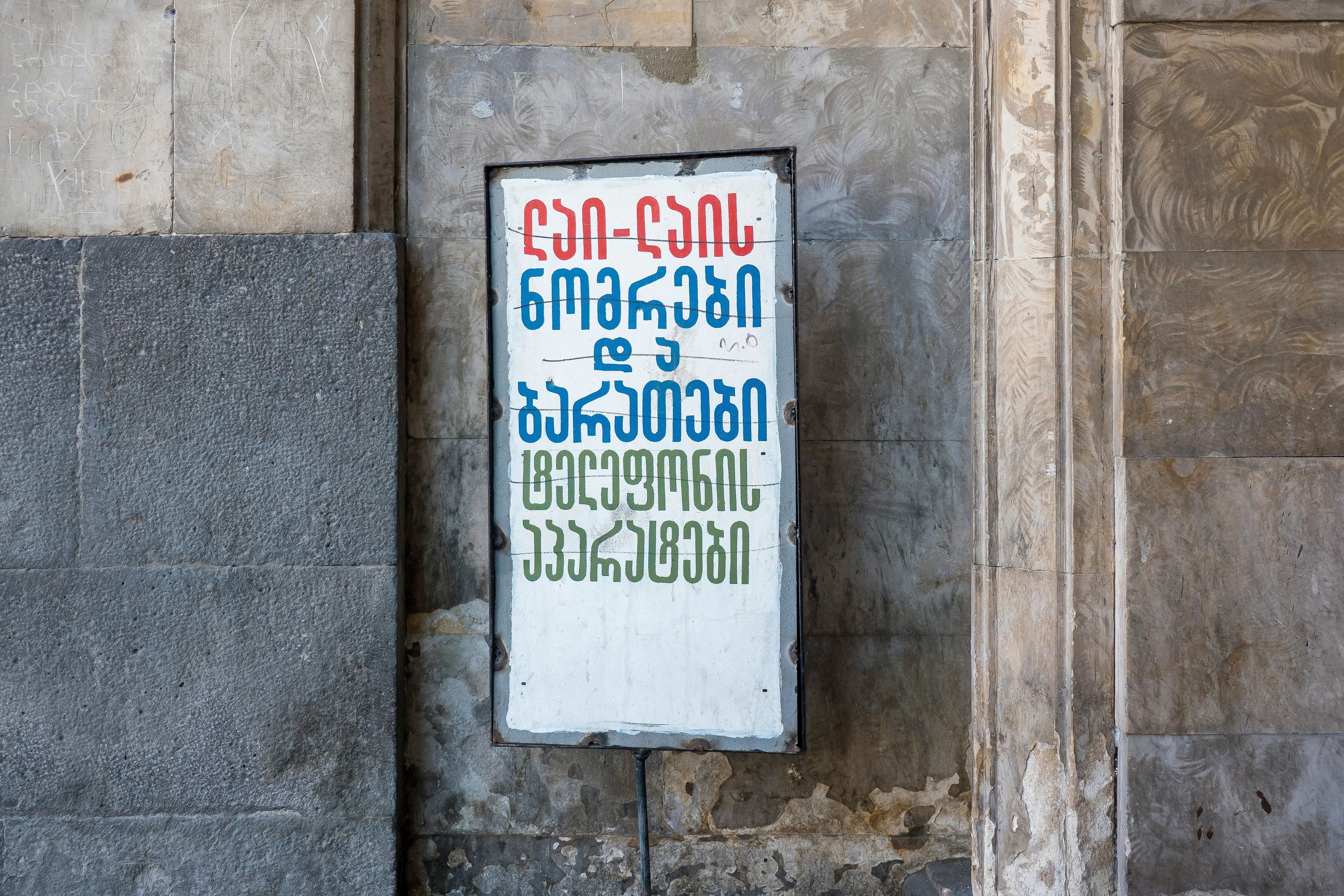
One of the most distinctive features of the Georgian language is its unique alphabet, known as Mkhedruli. This elegant script, with its rounded letters and flowing design, is unlike any other writing system in the world. The Georgian alphabet consists of 33 letters, each representing a specific sound, making it a phonetic writing system that accurately reflects the spoken language.
The development of the Georgian alphabet is attributed to King Parnavaz I in the 3rd century BC, though the current Mkhedruli script evolved over centuries. The alphabet has undergone several reforms and modifications, with the modern form being standardized in the 19th century. The beauty and functionality of the Georgian alphabet have made it a source of national pride and a symbol of Georgian cultural identity.
Linguistic Characteristics and Grammar
Georgian is known for its complex grammar and unique linguistic features. The language has a rich system of verb conjugation, with verbs changing form to indicate person, number, tense, aspect, and mood. Georgian verbs can have up to 8 different forms for a single verb, making the language particularly challenging for learners but also allowing for precise expression of meaning.
One of the most distinctive features of Georgian grammar is its system of case marking, which uses postpositions rather than prepositions. The language also has a complex system of agreement between subjects, objects, and verbs, with different verb forms indicating whether the action is performed on oneself, another person, or an object.
Georgian phonology is also distinctive, with a rich inventory of consonants including ejective stops and affricates that are rare in other languages. The language has a relatively simple vowel system but makes extensive use of consonant clusters, creating a distinctive sound that is immediately recognizable to speakers of other languages.
Literary Tradition and Cultural Significance
Georgian literature has a rich and distinguished history that spans more than 1,500 years. The earliest surviving Georgian texts are religious in nature, including translations of the Bible and other sacred texts. These early works demonstrate the sophisticated development of the language and its ability to express complex theological concepts.
The medieval period saw the flourishing of Georgian literature, with the creation of epic poems such as "The Knight in the Panther's Skin" by Shota Rustaveli. This masterpiece of world literature, written in the 12th century, remains a cornerstone of Georgian culture and is considered one of the greatest works of medieval literature.
Georgian literature continued to develop through the centuries, with periods of particular creativity during the Renaissance and the 19th century. Modern Georgian literature has produced internationally recognized authors and poets who have contributed to world literature while maintaining strong connections to Georgian cultural traditions.
Language and National Identity
The Georgian language has played a crucial role in maintaining national identity throughout the country's turbulent history. During periods of foreign domination, the language served as a powerful symbol of cultural resistance and national pride. The preservation and promotion of Georgian has been a central concern of Georgian intellectuals and political leaders throughout history.
In the modern era, Georgian continues to serve as a unifying force for the nation, bringing together people from different regions and backgrounds. The language is taught in schools throughout the country and is used in all official communications, government documents, and media. The Georgian government has implemented policies to protect and promote the language, recognizing its importance for national identity and cultural preservation.
Regional Dialects and Language Variation
Georgian exhibits significant regional variation, with distinct dialects spoken in different parts of the country. The main dialect groups include Kartlian (spoken in central Georgia), Kakhetian (eastern Georgia), Imeretian (western Georgia), and Gurian (southwestern Georgia). These dialects differ in pronunciation, vocabulary, and some grammatical features while maintaining mutual intelligibility.
The mountainous regions of Georgia, particularly Svaneti and the highlands of Adjara, have preserved particularly distinctive linguistic features. These isolated communities have maintained ancient linguistic forms and vocabulary that provide valuable insights into the historical development of the language.
Language Education and Preservation
Georgia has a strong tradition of language education and preservation. The study of Georgian language and literature is a central component of the national education system, with students learning not only the modern language but also classical forms and literary traditions. Universities throughout Georgia offer programs in Georgian philology, linguistics, and literature.
The preservation of Georgian has been supported by various cultural institutions, including the Georgian Language Society and the National Academy of Sciences. These organizations work to document and preserve the language's various forms, conduct linguistic research, and promote the study of Georgian both within the country and internationally.
Modern Challenges and Adaptations
Like many minority languages in the modern world, Georgian faces challenges from globalization and the dominance of international languages, particularly English and Russian. However, Georgian has shown remarkable resilience and adaptability, successfully incorporating new vocabulary and concepts while maintaining its distinctive character.
The development of technology and digital media has presented both challenges and opportunities for the Georgian language. The creation of Georgian fonts and keyboard layouts has made it easier to use the language in digital contexts, while social media and the internet have provided new platforms for Georgian language content.
International Recognition and Study
Georgian has attracted increasing international attention from linguists and scholars who recognize its unique characteristics and historical significance. Universities around the world offer courses in Georgian language and culture, and international conferences on Caucasian linguistics regularly feature presentations on Georgian.
The study of Georgian has contributed to broader linguistic research, particularly in areas such as ergativity, verb morphology, and language typology. Georgian's unique grammatical features have made it an important case study for theoretical linguistics and have influenced the development of linguistic theory.
Language and Tourism
For visitors to Georgia, learning some basic Georgian phrases can greatly enhance the travel experience. While many Georgians speak English or Russian, making an effort to speak Georgian is greatly appreciated and can lead to more meaningful cultural exchanges. The Georgian government and tourism organizations have developed language learning materials specifically for visitors.
Language schools and cultural centers in Tbilisi and other major cities offer Georgian language courses for foreigners, ranging from basic tourist phrases to advanced literary study. These programs often include cultural components, helping students understand the language in its cultural context.
The Future of Georgian
As Georgia continues to develop and engage with the global community, the Georgian language faces both challenges and opportunities. The language's rich history and unique characteristics provide a strong foundation for continued development, while modern technology and international connections offer new possibilities for growth and adaptation.
The Georgian government and cultural institutions continue to work on language preservation and development, recognizing the crucial role that language plays in maintaining national identity and cultural heritage. Educational programs, cultural initiatives, and international partnerships all contribute to ensuring that Georgian remains a vibrant and living language.
Conclusion: A Living Heritage
The Georgian language represents one of the world's most remarkable linguistic traditions, combining ancient origins with remarkable adaptability. Its unique alphabet, complex grammar, and rich literary tradition make it a fascinating subject of study and a powerful symbol of Georgian national identity.
As Georgia continues to navigate the challenges of the modern world, the Georgian language serves as a vital link between past and present, tradition and innovation. The preservation and promotion of this ancient language is not merely a linguistic concern but a fundamental aspect of maintaining Georgia's cultural heritage and national identity.
The resilience and beauty of the Georgian language stand as a testament to the enduring strength of Georgian culture and the determination of the Georgian people to preserve their unique heritage. As the language continues to evolve and adapt to modern needs, it remains a powerful expression of Georgian identity and a source of pride for the nation.
Ancient Origins and Historical Development
The Georgian language belongs to the Kartvelian language family, a small but distinctive group of languages that includes Georgian, Svan, Mingrelian, and Laz. This language family is unique in the region, with no known relatives among the Indo-European, Turkic, or Semitic language families that surround Georgia. The origins of Georgian can be traced back to ancient times, with the earliest written records dating to the 5th century AD, though linguistic evidence suggests the language has been spoken for much longer.
The development of Georgian has been closely tied to the country's political and cultural history. During the medieval period, Georgian became the language of a powerful kingdom that extended its influence across the Caucasus region. This period saw the flourishing of Georgian literature, with the creation of epic poems, religious texts, and historical chronicles that remain important cultural treasures today.
The Georgian Alphabet: A Unique Writing System
One of the most distinctive features of the Georgian language is its unique alphabet, known as Mkhedruli. This elegant script, with its rounded letters and flowing design, is unlike any other writing system in the world. The Georgian alphabet consists of 33 letters, each representing a specific sound, making it a phonetic writing system that accurately reflects the spoken language.
The development of the Georgian alphabet is attributed to King Parnavaz I in the 3rd century BC, though the current Mkhedruli script evolved over centuries. The alphabet has undergone several reforms and modifications, with the modern form being standardized in the 19th century. The beauty and functionality of the Georgian alphabet have made it a source of national pride and a symbol of Georgian cultural identity.
Linguistic Characteristics and Grammar
Georgian is known for its complex grammar and unique linguistic features. The language has a rich system of verb conjugation, with verbs changing form to indicate person, number, tense, aspect, and mood. Georgian verbs can have up to 8 different forms for a single verb, making the language particularly challenging for learners but also allowing for precise expression of meaning.
One of the most distinctive features of Georgian grammar is its system of case marking, which uses postpositions rather than prepositions. The language also has a complex system of agreement between subjects, objects, and verbs, with different verb forms indicating whether the action is performed on oneself, another person, or an object.
Georgian phonology is also distinctive, with a rich inventory of consonants including ejective stops and affricates that are rare in other languages. The language has a relatively simple vowel system but makes extensive use of consonant clusters, creating a distinctive sound that is immediately recognizable to speakers of other languages.
Literary Tradition and Cultural Significance
Georgian literature has a rich and distinguished history that spans more than 1,500 years. The earliest surviving Georgian texts are religious in nature, including translations of the Bible and other sacred texts. These early works demonstrate the sophisticated development of the language and its ability to express complex theological concepts.
The medieval period saw the flourishing of Georgian literature, with the creation of epic poems such as "The Knight in the Panther's Skin" by Shota Rustaveli. This masterpiece of world literature, written in the 12th century, remains a cornerstone of Georgian culture and is considered one of the greatest works of medieval literature.
Georgian literature continued to develop through the centuries, with periods of particular creativity during the Renaissance and the 19th century. Modern Georgian literature has produced internationally recognized authors and poets who have contributed to world literature while maintaining strong connections to Georgian cultural traditions.
Language and National Identity
The Georgian language has played a crucial role in maintaining national identity throughout the country's turbulent history. During periods of foreign domination, the language served as a powerful symbol of cultural resistance and national pride. The preservation and promotion of Georgian has been a central concern of Georgian intellectuals and political leaders throughout history.
In the modern era, Georgian continues to serve as a unifying force for the nation, bringing together people from different regions and backgrounds. The language is taught in schools throughout the country and is used in all official communications, government documents, and media. The Georgian government has implemented policies to protect and promote the language, recognizing its importance for national identity and cultural preservation.
Regional Dialects and Language Variation
Georgian exhibits significant regional variation, with distinct dialects spoken in different parts of the country. The main dialect groups include Kartlian (spoken in central Georgia), Kakhetian (eastern Georgia), Imeretian (western Georgia), and Gurian (southwestern Georgia). These dialects differ in pronunciation, vocabulary, and some grammatical features while maintaining mutual intelligibility.
The mountainous regions of Georgia, particularly Svaneti and the highlands of Adjara, have preserved particularly distinctive linguistic features. These isolated communities have maintained ancient linguistic forms and vocabulary that provide valuable insights into the historical development of the language.
Language Education and Preservation
Georgia has a strong tradition of language education and preservation. The study of Georgian language and literature is a central component of the national education system, with students learning not only the modern language but also classical forms and literary traditions. Universities throughout Georgia offer programs in Georgian philology, linguistics, and literature.
The preservation of Georgian has been supported by various cultural institutions, including the Georgian Language Society and the National Academy of Sciences. These organizations work to document and preserve the language's various forms, conduct linguistic research, and promote the study of Georgian both within the country and internationally.
Modern Challenges and Adaptations
Like many minority languages in the modern world, Georgian faces challenges from globalization and the dominance of international languages, particularly English and Russian. However, Georgian has shown remarkable resilience and adaptability, successfully incorporating new vocabulary and concepts while maintaining its distinctive character.
The development of technology and digital media has presented both challenges and opportunities for the Georgian language. The creation of Georgian fonts and keyboard layouts has made it easier to use the language in digital contexts, while social media and the internet have provided new platforms for Georgian language content.
International Recognition and Study
Georgian has attracted increasing international attention from linguists and scholars who recognize its unique characteristics and historical significance. Universities around the world offer courses in Georgian language and culture, and international conferences on Caucasian linguistics regularly feature presentations on Georgian.
The study of Georgian has contributed to broader linguistic research, particularly in areas such as ergativity, verb morphology, and language typology. Georgian's unique grammatical features have made it an important case study for theoretical linguistics and have influenced the development of linguistic theory.
Language and Tourism
For visitors to Georgia, learning some basic Georgian phrases can greatly enhance the travel experience. While many Georgians speak English or Russian, making an effort to speak Georgian is greatly appreciated and can lead to more meaningful cultural exchanges. The Georgian government and tourism organizations have developed language learning materials specifically for visitors.
Language schools and cultural centers in Tbilisi and other major cities offer Georgian language courses for foreigners, ranging from basic tourist phrases to advanced literary study. These programs often include cultural components, helping students understand the language in its cultural context.
The Future of Georgian
As Georgia continues to develop and engage with the global community, the Georgian language faces both challenges and opportunities. The language's rich history and unique characteristics provide a strong foundation for continued development, while modern technology and international connections offer new possibilities for growth and adaptation.
The Georgian government and cultural institutions continue to work on language preservation and development, recognizing the crucial role that language plays in maintaining national identity and cultural heritage. Educational programs, cultural initiatives, and international partnerships all contribute to ensuring that Georgian remains a vibrant and living language.
Conclusion: A Living Heritage
The Georgian language represents one of the world's most remarkable linguistic traditions, combining ancient origins with remarkable adaptability. Its unique alphabet, complex grammar, and rich literary tradition make it a fascinating subject of study and a powerful symbol of Georgian national identity.
As Georgia continues to navigate the challenges of the modern world, the Georgian language serves as a vital link between past and present, tradition and innovation. The preservation and promotion of this ancient language is not merely a linguistic concern but a fundamental aspect of maintaining Georgia's cultural heritage and national identity.
The resilience and beauty of the Georgian language stand as a testament to the enduring strength of Georgian culture and the determination of the Georgian people to preserve their unique heritage. As the language continues to evolve and adapt to modern needs, it remains a powerful expression of Georgian identity and a source of pride for the nation.